How Severe San Fernando Valley Heatwaves Triggers Emergency AC System Failures
How Severe San Fernando Valley Heatwaves Triggers Emergency AC System Failures
Valley heatwaves do not forgive weak air conditioners. Sherman Oaks homes south of Ventura Boulevard run 3 to 5 degrees hotter than Van Nuys when marine layer fails to push through the Sepulveda Pass. July and August bring 95 to 105 degree afternoons with nights that stay in the high 70s. AC systems in 91423 and 91403 cycle without a break, and anything marginal turns into an emergency. ServiStar Plumbing and HVAC sees the same pattern every year from its headquarters at 13351 Riverside Drive Suite #414. Outdoor condensing units overheat. Run capacitors pop. Compressors seize. Ducts leak cold air into 140 degree attics. By early evening, the call volume spikes with families reporting AC not cooling across Sherman Oaks, Studio City, Encino, and Van Nuys.
This is not theory. It is lived field work across Longridge Estates, Chandler Estates, Sherman Oaks Hills, and the Valley Vista corridor. The homes differ by era and construction, but the heatwave failure path repeats. Incorrectly sized equipment. Poor airflow. A dirty condenser coil. Low refrigerant charge from a slow leak. A clogged condensate drain line that trips the float switch and shuts off the system. Add in California’s 2026 shift to R-454B refrigerant and the stricter SEER2 efficiency minimum of 15.2 in California, and the repair versus replace calculation during a heat event needs a local lens and a code-aware contractor.
Why Valley heat pushes AC systems over the edge
San Fernando Valley sits in ASHRAE Climate Zone 9 with a 96 degree design temperature at the 1 percent cooling percentile. That number sets the load math, but real life goes beyond the design day. When the blacktop on Ventura Boulevard radiates heat after sunset and attic temperatures stay above 120 degrees into the night, the stress on central AC systems spikes. The outdoor condenser coil on the side yard cannot reject heat as fast because the ambient air is already hot. The compressor works harder to maintain pressure. The load on the run capacitor, which is the cylindrical electrical component inside the outdoor unit that stores and releases a quick energy pulse to start and help run the compressor and fan motor, increases every cycle. Weak capacitors fail at the worst hour.
Inside the home, a dirty filter or undersized return air duct starves the blower. The evaporator coil starts to frost. Airflow drops even more. Supply air temperature rises. The thermostat never reaches setpoint. The system short cycles to protect itself, which means it starts and stops more often than it should. That hot cycle repeats on homes from Valley Vista to Royal Woods. By late afternoon on a heat advisory day, the combined stress creates emergency AC not cooling calls across 91423, 91403, 91604, 91316, and 91436.
Common emergency failures ServiStar sees during heatwaves
Emergency failures are not random. The same weak links show up under Sherman Oaks conditions.
- Failed run capacitor that prevents the compressor or the outdoor fan motor from starting. Often shows as a humming outdoor unit with no fan movement.
- Frozen evaporator coil from restricted airflow or low refrigerant. Air stops at registers. Sometimes a sour or musty smell when the ice melts and drains poorly.
- Refrigerant leak on an aging R-410A system. Performance drops each week in heat. Sight glass may bubble. Suction line may no longer sweat.
- Clogged condensate drain line that trips the float switch. The air handler pan fills and the unit shuts down to avoid water damage.
- Duct leakage in a superheated attic. The system loses a large share of cooled air to the attic and pulls hot attic air into the return side through gaps, which can be 10 to 20 percent of total airflow if never sealed or verified.
These issues exist all summer, but heatwaves pull the trigger. ServiStar technicians stage parts based on local failure rates. The service trucks carry multiple capacitor sizes, contactors, hard-start kits, drain clearing tools, and digital manifolds for fast diagnostics. The team also knows which Sherman Oaks streets produce access challenges during 101 or 405 traffic, so the dispatcher routes from Riverside Drive to reach Ventura Boulevard, Woodman Avenue, Hazeltine Avenue, and Kester Avenue corridors quickly during peak calls.
Equipment age, refrigerants, and how 2026 affects emergency decisions
Any emergency AC repair in Sherman Oaks after January 1, 2026 sits inside new federal and California standards. The R-454B refrigerant transition under the EPA SNAP rule ends new manufacturing of R-410A systems in 2026. R-454B is an A2L refrigerant, which means it is mildly flammable and must be handled under specific code and safety practices. Its global warming potential is 466 versus R-410A at 2,088. New split systems will be R-454B from major brands like Carrier, Trane, and Lennox. ServiStar holds EPA Section 608 Universal certification and has completed A2L R-454B transition training for safe handling and correct charging.
Homeowners with a 10 to 15 year old R-410A system that suffers a refrigerant leak during a heatwave face a decision. Recharging a legacy R-410A unit with recovered refrigerant is possible, but the supply of new virgin R-410A tightens after 2026. That affects long-term serviceability and cost. If the compressor is failing or if the evaporator coil is leaking, the better move can be a replacement to a 15.2 SEER2 or higher R-454B system that meets the 2025 California Building Codes effective January 1, 2026. ServiStar lays out those trade-offs on the driveway in clear language. No pressure. The goal is an honest path that keeps the home cool today and keeps maintenance options open tomorrow.
Why Manual J calculations and duct design matter more on hot Valley blocks
Incorrect sizing is the hidden cause behind many emergency failures. Oversized AC short cycles under moderate loads and cannot dehumidify or keep even temperatures. Undersized AC runs constantly and fails early. Manual J Residential Load Calculation, which is the industry standard math that models a home’s heat gain based on window area, insulation, shading, orientation, and internal loads, is the only way to size correctly. This matters in Sherman Oaks because south-of-Ventura properties run hotter than the same square footage in Valley Village. ServiStar performs Manual J at the estimate stage for changeouts and new installations. Then Manual S equipment selection ensures the chosen model matches the load at the right airflow and static pressure. Manual D ductwork design verifies the return and supply duct sizes to deliver that airflow without excessive static pressure that would strain the blower and starve the evaporator coil.
Title 24 Part 6 also requires duct sealing verification at a maximum 6 percent leakage for most changeouts, with HERS registry filing before LADBS final inspection. This is a shareable local fact that surprises many homeowners. If a contractor skips HERS testing or the ducts fail and leak at 15 percent, LADBS can withhold final sign-off and force corrective work. ServiStar includes the HERS pathway on every permitted AC replacement. That extra diligence during an installation is part of why fewer ServiStar systems end up as emergency calls when the next heatwave hits.
Attics over 120 degrees change the rules
Attic temperature above 120 degrees is typical in Sherman Oaks during a heat advisory. On some west-facing roofs, temperatures can exceed that by a wide margin in mid-afternoon. In that environment, the air handler and ducts must not pull attic air through leaks. A small return bypass or a boot gap at a ceiling register becomes a serious performance hit. It also accelerates evaporator coil icing and blower motor overheating. ServiStar technicians check static pressure at the return with a manometer, which is a tool that reads pressure in inches of water column. High static pressure signals undersized return ducts or clogged filters. That informs immediate fixes such as a higher surface area filter cabinet or a second return grille to reduce pressure and keep the system stable during peak heat.
Another local detail is the condensate drain routing from second floor air handlers on Valley Vista and Royal Woods two-story homes. Long horizontal runs with marginal slope trap debris. When humidity rises during a heatwave and the coil condenses more water, that shallow slope and algae buildup combine to trip float switches and shut down cooling. ServiStar clears lines with a wet vacuum, blows the line with nitrogen if needed, and doses the pan with an EPA-approved condensate treatment. When the run itself is the problem, the team reroutes the condensate line with proper slope and cleanout access and pulls an LADBS mechanical permit if the scope requires new penetration or piping change subject to inspection.
Commercial RTUs on Ventura Boulevard and Westfield Fashion Square load patterns
Rooftop packaged units across Ventura Boulevard and at Westfield Fashion Square endure even harsher cycles. The roof surface heats to extreme levels by mid-day. Compressors in older RTUs cycle on high head pressure. Supply fan belts stretch and slip. Economizers that should provide outside air lock in place from lack of maintenance. A single failed capacitor or contactor in a 12.5 ton RTU serving a retail tenant can put $40,000 of inventory at risk. ServiStar’s commercial HVAC service keeps common failure parts on the truck and performs light commercial load checks under Manual N when changeouts or capacity issues arise. If gas piping changes are needed, SoCalGas pressure test requirements and LADBS commercial permits are coordinated through the Van Nuys office with clear timelines.
R-454B systems, SEER2 minimums, and how to think about replacement during a heatwave
California’s 15.2 SEER2 minimum for split systems applies to permits pulled under the 2025 code set effective January 1, 2026. Many R-454B systems come as variable speed or multi-stage units that handle part-load conditions well. That means better comfort in shoulder seasons and less stress during heatwaves because the system stages up smoothly. For ducted systems, ServiStar reviews the existing refrigerant line set to confirm size and material. If a line set replacement is needed to meet the manufacturer’s R-454B spec or to address prior kinks or rub-outs, the permit scope includes line set replacement. The team also checks clearances around the outdoor condenser, which is often squeezed along narrow Sherman Oaks side yards, to ensure proper airflow. That one detail avoids chronic high head pressure faults when the sun bakes the stucco wall and the fence blocks exhaust air.
Why many “AC not cooling” emergencies start with duct leakage and poor airflow
ServiStar tracks failure data by zip code. Across 91423, 91403, 91604, 91401, and 91411, a large share of no-cool calls trace to airflow. A clogged filter is obvious, but the bigger problem is duct leakage and undersized returns. The fix is not a guess. Technicians measure total external static pressure at the air handler and compare it to the blower table that the manufacturer provides. If the airflow is below the tonnage requirement, supply registers stay warm and the coil may freeze. Sealant on accessible duct seams, mastic application at boots and plenum, and new return duct sizing can drop static pressure and raise delivered CFM. The Title 24 duct leakage test provides a pass or fail at 6 percent. Passing the test is more than a checkbox. It keeps the system alive when the attic is 130 degrees and the house is full of people on a Saturday night in August.
Surprising but local and true
Homeowners and real estate agents like to share this one because it affects permits and resale. Title 24 requires duct leakage verification at a maximum 6 percent on most AC replacements, with a signed HERS registry report filed before LADBS final inspection at the Van Nuys office. If a contractor installs a new 15.2 SEER2 system but skips HERS and the ducts leak at 12 percent, LADBS can hold the final and require a fix. Many older Valley homes have 15 to 25 percent leakage before work. ServiStar designs changeouts to hit the 6 percent standard the first time. The result is stronger performance under heatwaves and fewer emergency calls when the Valley hits triple digits.
What ServiStar checks first on an emergency AC visit in Sherman Oaks
Technicians move fast, but they do not skip the essentials. The workflow is simple and proven across hundreds of emergency calls from Sherman Oaks Galleria to the Van Nuys Sherman Oaks Recreation Center area.
- Power and controls sanity check. Breakers, disconnect, thermostat call, and low voltage fuse in the air handler.
- Outdoor unit operation. Fan running, compressor start, amp draw, and run capacitor microfarad reading against the nameplate value.
- Refrigerant circuit. Suction and liquid line temperatures and pressures, superheat and subcool calculations, and a quick scan for oil at line set joints that suggests a leak.
- Airflow. Filter, blower wheel cleanliness, evaporator coil condition, static pressure reading, and delivered supply temperature delta.
- Condensate drain. Pan full, float switch status, drain line slope and blockage, and secondary pan condition in attic installs.
This is not a tutorial. It is the path to a fast answer plumbing near me and a same-day fix where possible. If the system is near end of life and the failure suggests a larger problem, the technician explains options in plain English. If the home qualifies for rebates on a heat pump changeout and the owner has considered electrification, the federal Inflation Reduction Act Section 25C tax credit up to $2,000 and the California TECH Clean California heat pump rebate up to $3,000 in 2026 can combine to reach $5,000 on qualifying installations. LADWP HVAC rebates can also apply. That matters when a compressor is failed and the home is hot.
Valley housing archetypes and how they fail under heat
Post-war ranch homes in central Sherman Oaks built in the 1940s and 1950s often have small return air grilles, single central returns, and retrofitted ducts that were never sealed well. These homes ride the ragged edge under heat. Split-level 1960s and 1970s homes in Chandler Estates and Magnolia Woods may have long duct runs through cramped attic bays. The friction loss on those runs spikes static pressure. 1980s and 1990s redevelopments in Sherman Oaks Hills and along Mulholland Drive can have ABS drain lines and copper refrigerant line sets that run up steep slopes with multiple elbows. Those elbows add pressure drop. Early 2000s hillside contemporaries with PEX-A plumbing and tankless water heaters often include second floor air handlers in tight closets without proper makeup air for service. Each archetype needs a different airflow and service approach during a heatwave.
Commercial spaces along Ventura Boulevard, at Westfield Fashion Square, and in the Sherman Oaks Galleria rely on rooftop packaged units with economizers and belts that require seasonal maintenance. Under a heat advisory, an economizer fault that admits hot outdoor air will mimic a failed compressor. Trained techs confirm the mode and fix the damper rather than condemning the unit. ServiStar’s commercial HVAC team handles those calls under 24 hour dispatch because downtime pushes customers out the door.
Permits, inspections, and why code matters in an emergency
Emergency repairs do not require permits in most cases. AC replacements and line set changeouts do. LADBS permits for residential HVAC changeouts route through the Van Nuys office for Sherman Oaks and surrounding zip codes. Typical approval is two to three weeks for standard residential scope. The 2025 California Building Codes that take effect on January 1, 2026 require 15.2 SEER2 minimum, R-454B refrigerant on newly manufactured systems, and HERS registry filing for duct leakage. ServiStar manages the permit application and HERS coordination for every permitted project. Homeowners do not have to visit LADBS or navigate ePlan. The inspector sees a clean file, a compliant installation, and passes it without drama.
Gas piping changes for a furnace or a dual fuel heat pump in a hybrid system will follow California Mechanical Code and SoCalGas requirements. If the scope ties into plumbing for a new condensate drain or condensate pump discharge, ServiStar’s C-36 plumbing license and integrated service team handle that interface. One contractor. One schedule. No finger pointing between trades if a condensate line backs up during the first heatwave after a changeout.
Diagnostics speed and parts access during heat advisories
Time matters when the Valley is over 100 degrees. ServiStar stages inventory in Sherman Oaks with a focus on high-failure parts for Carrier, Trane, Lennox, and Mitsubishi Electric ductless equipment. The trucks carry multiple capacitors, contactors, blower motors common to residential tonnages, and universal condenser fan motors. The team uses digital gauges for accurate refrigerant readings under high ambient conditions. For ductless mini-split emergencies in Toluca Lake, Valley Village, and Burbank, the crew stocks line set flare kits, communication cable, and condensate pumps. The goal is a same-day repair whenever safe and practical.
What the 2026 refrigerant change means for ductless and heat pumps in the Valley
Ductless mini-splits and heat pumps will also run on R-454B on new manufacturing after January 1, 2026. Mitsubishi Electric, Daikin, and Bosch have released or announced A2L-ready models and handling protocols. ServiStar technicians hold EPA Section 608 Universal certification and A2L training so they can charge, evacuate, and recover refrigerant correctly. Homes in 91403 that want zone-by-zone control for upstairs bedrooms often use ductless heads that must be mounted and piped through hot exterior walls. In July, sun-exposed linesets amplify heat gain if not properly insulated and shielded. ServiStar follows manufacturer clearances, uses UV-resistant line set insulation, and confirms condensate routing that does not back up on long horizontal runs. These small steps cut emergency calls during heat events.
Energy, airflow, and the path to stable summer performance
Energy ratings are not just about bills. A properly sized 15.2 SEER2 system with a clean condenser coil and correct charge will handle Valley peaks better than a higher nameplate SEER unit that is misapplied. ServiStar checks delivered capacity by comparing supply and return air temperatures and by calculating sensible heat ratio for comfort. The team also looks at insulation levels in older Sherman Oaks attics. Insulation that has settled or been compressed by storage raises load on the AC. While ServiStar is not an insulation contractor, that advisory helps homeowners understand why even a new AC struggles when the sun sets late and the roof deck keeps radiating heat.
Integrated plumbing and HVAC helps during emergencies
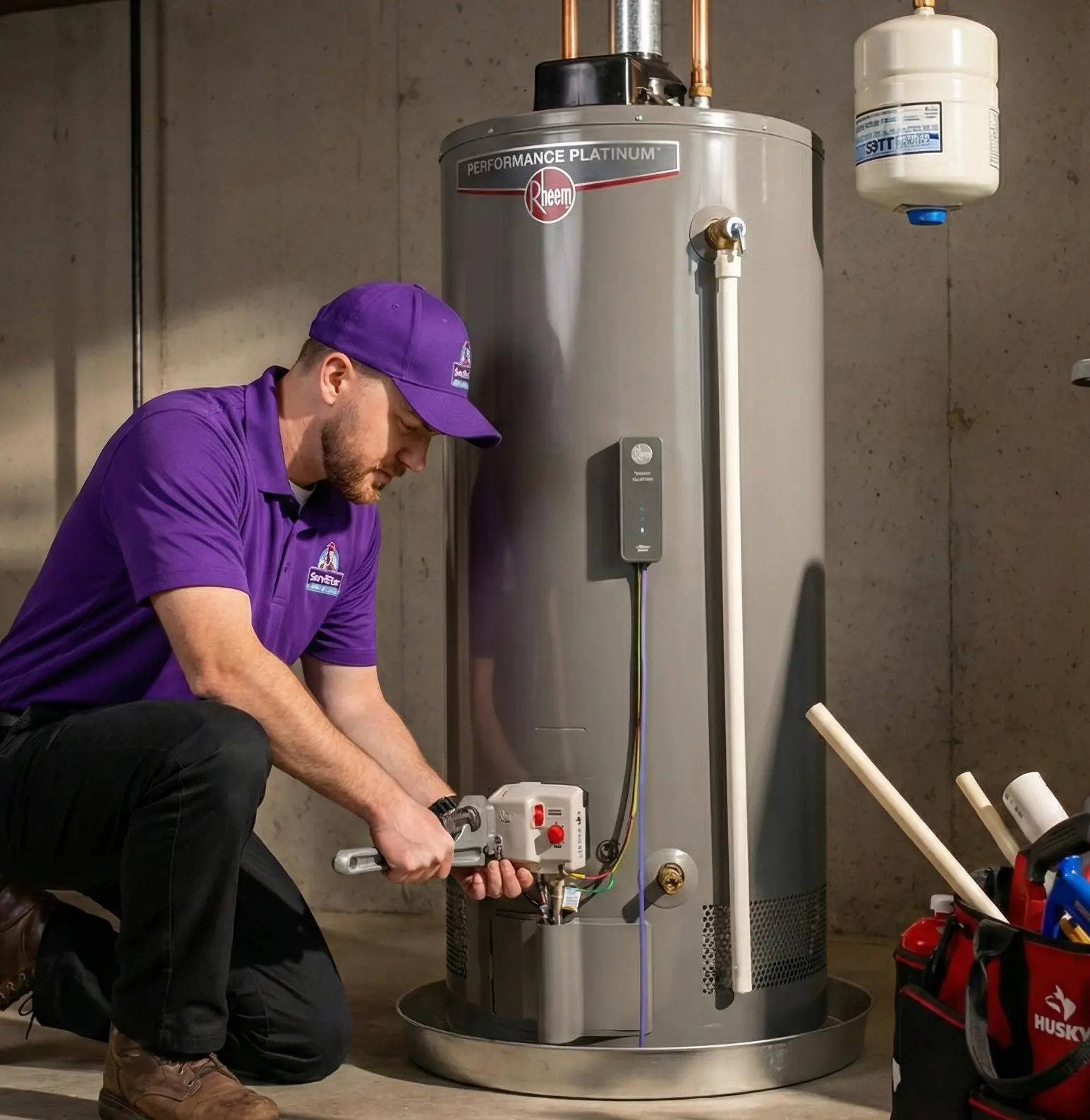
Heatwaves expose plumbing links too. Condensate drains that tie into a plumbing stack can back up and flood ceilings if a trap is dry or if the tie-in lacks a proper vent path. ServiStar’s C-36 plumbing license means the HVAC crew knows the California State Plumbing Code details that protect against that failure. If a water heater is in the same closet as the air handler, code clearances for combustion air and venting must be respected when changing equipment footprint. Tankless water heaters with high BTU draw can also affect gas pipe sizing when a furnace is on the same branch. ServiStar coordinates gas pipe verification and upsizes when needed under LADBS oversight. This is where the search for plumbing contractors near me often ends up with two vendors and mixed liability. ServiStar keeps it under one roof and one permit set.
Neighborhood by neighborhood, what ServiStar sees
In 91423 central Sherman Oaks near Westfield Fashion Square and the Sherman Oaks Galleria, single story ranch homes often have low attic clearance and a single central return. Upgrades focus on return capacity and duct sealing to hit the 6 percent Title 24 target. In 91403 south of Ventura Boulevard, hillside properties see attic temperatures that hover high into the night, which calls for outdoor unit placement with strong airflow and shading that does not block condenser exhaust. Encino 91316 and 91436 bring larger two story homes with more tonnage and long duct runs. Short cycling from oversized equipment shows up here, and variable speed R-454B systems sized by Manual J solve it. Studio City 91604 and Valley Village 91607 include mid-century and remodeled stock where head pressure faults during 5 pm sun to the west wall of a side yard condenser are common. Van Nuys 91401 and 91411 produce a high volume of emergency calls during the first heatwave due to older equipment. Toluca Lake 91602 and Burbank 91504 through 91506 add more ductless service for studios and guest houses.
Why the quick fix sometimes is not the right fix
It is tempting during a 103 degree day to swap a capacitor and move on. That gets cold air now, but it may not solve the deeper fault that caused overheating. ServiStar trains technicians to share findings and show the readings that inform the diagnosis. If the compressor is drawing high amps due to a dirty condenser coil and a blocked coil face along a property wall, that is part of the fix. If static pressure is off the charts, a new filter will not solve it. A second return or a larger filter base may be needed. If the refrigerant charge is low and oil marks show at the evaporator coil U-bends, a leak search with an electronic detector is appropriate before a recharge. The goal is to avoid a second emergency visit two days later.
Shareable local claim for homeowners and publications
Title 24 duct sealing verification at a maximum 6 percent leakage with HERS registry filing is required before LADBS will finalize most residential AC changeouts in Sherman Oaks. Many Valley homes test at 15 to 25 percent leakage before work. Contractors that skip HERS risk a failed final and a required retrofit after the fact. ServiStar builds installations to pass at 6 percent or better and files the HERS report as part of the LADBS permit closeout. This one step cuts emergency AC calls during heatwaves because the system keeps more of its cooled air inside the home rather than dumping it into a 130 degree attic.
What homeowners can do while waiting for a technician
The actions below can stabilize a home without harming equipment. They are safe, quick checks that can buy time until a ServiStar technician arrives.
Set the thermostat higher by 2 degrees to reduce compressor load. Replace an obviously dirty filter if a spare is on hand. Make sure the outdoor unit fan spins freely and the top is clear of debris. Check that supply registers are open and not blocked by furniture. If water is present under an attic air handler, switch the system to fan only and place a pan under the drip point. Do not attempt to add refrigerant or open electrical panels. That work requires EPA Section 608 certification and is unsafe for homeowners.
Pricing transparency and emergency dispatch process
ServiStar runs 24/7 emergency HVAC service across the San Fernando Valley and Greater Los Angeles. Upfront flat-rate pricing on standard service categories keeps surprises out of after-hours visits. For emergency replacements, a technician can stabilize the system if possible, provide a same-day proposal that meets the 15.2 SEER2 California minimum and R-454B requirements for new manufacturing, and begin LADBS permit application through the Van Nuys office. Financing through approved lenders is available for qualified customers. Manufacturer warranties on installed equipment and workmanship warranty on labor apply. On changeouts, free in-home estimates are provided once the home is cooled or stabilized.
Credentials that matter on a 100 degree day
ServiStar holds dual licensure with the California Contractors State License Board as a C-36 Plumbing Contractor and a C-20 Warm-Air Heating, Ventilating and Air Conditioning Contractor. The company is bonded and insured. All HVAC technicians hold EPA Section 608 Universal certification and have completed R-454B A2L refrigerant transition training. ServiStar is BBB Accredited and best emergency plumber near me Google Guaranteed. The installation teams are manufacturer-certified for Carrier, Trane, Lennox, Mitsubishi Electric, Rinnai, and Navien. That means the same team that repairs an AC during a heatwave can also handle a tankless water heater or condensate drain tie-in without a second contractor. LADBS permit application and management are included on every project that requires permits. The service footprint covers Sherman Oaks, Encino, Studio City, Van Nuys, Toluca Lake, Valley Village, Burbank, and Tarzana.
Local summary for Sherman Oaks homeowners under heat stress
Severe San Fernando Valley heatwaves expose AC systems that are undersized, misapplied, dirty, or leaking. The most common emergency failures are failed run capacitors, frozen coils, low refrigerant charge, clogged condensate drains, and duct leakage that wastes cooling in superheated attics. Manual J load calculation, Manual S equipment selection, Manual D duct design, Title 24 duct sealing verification at 6 percent, and attention to attic conditions make the difference between a system that quits at 5 pm and a system that grinds through the worst Valley day. The 2026 shift to R-454B and the California 15.2 SEER2 minimum require code-aware installations and changeouts that will pass LADBS final at the Van Nuys office. ServiStar’s integrated plumbing and HVAC capability helps when condensate and gas piping intersect with AC service. The team’s dispatch from 13351 Riverside Drive Suite #414 in 91423 keeps arrival times tight even when the call volume surges.
Ready for emergency AC repair and stabilization
If the home in Sherman Oaks, Encino, Studio City, Van Nuys, or Toluca Lake has AC not cooling during a heatwave, ServiStar dispatches now. Call (818) 873-0613 for 24/7 emergency HVAC service. A technician will diagnose fast, stabilize the home, and explain repair or replacement paths that meet California’s 2026 SEER2 and R-454B standards. LADBS permit management is included for any permitted scope. Free in-home estimates are provided for installations. Financing is available through approved lenders. ServiStar’s CSLB C-36 and C-20 dual-licensed team, EPA Section 608 certified and A2L trained, serves the San Fernando Valley from the Sherman Oaks headquarters with the speed and code accuracy that heatwave emergencies require. Homeowners searching for plumbing contractors near me who also need HVAC support can end the search with a single call.